
How Casting Really Works
What Talents Are Never Told (But Should Know)
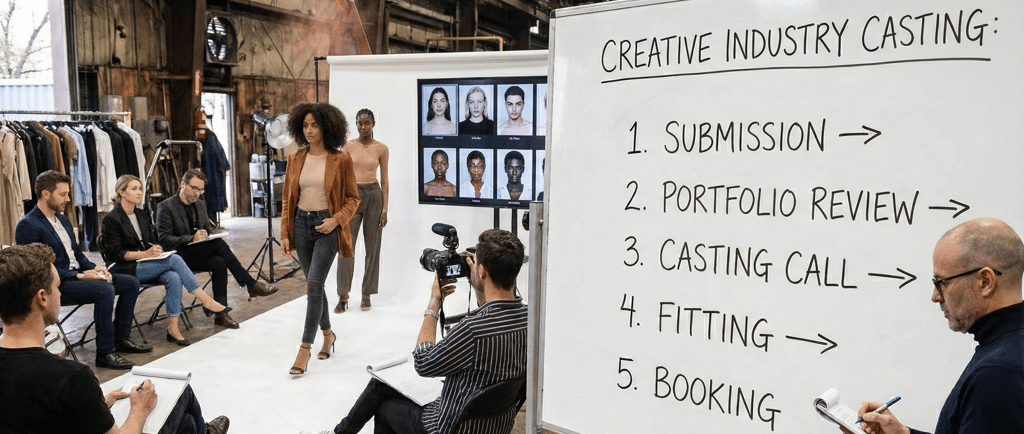
What Talents Are Never Told (But Should Know)
The Middle East is one of the fastest-growing creative markets in the world. Fashion campaigns, global brands, luxury events, commercials, exhibitions opportunities are everywhere.
Yet thousands of talented creatives apply every day and never hear back.
This isn’t because they aren’t good enough.
It’s because casting doesn’t work the way most talents think it does.
Let’s break the silence.
The First Truth: Casting Starts Before You Ever Apply
Most talents believe casting begins when a job is posted.
In reality, casting begins long before that.
What Actually Happens First
A brand or production house defines the brief
They lock:
Budget
Timeline
Target look & demographics
Usage rights
Risk tolerance
By the time you see a casting call, 70% of decisions are already shaped.
This is why applying early doesn’t guarantee visibility - fitting the brief does.
Stage 1: The Shortlisting Filter (Where Most Talents Disappear)
Casting teams don’t review applications equally.
They filter aggressively.
The First Filters Are NOT Talent
Casting teams eliminate based on:
Incomplete profiles
Unclear availability
No recent or relevant work
Slow communication
No professional footprint
If a recruiter can’t immediately understand:
Who you are
What you do
How to book you
They move on.
Stage 2: Trust & Risk Assessment
In the Middle east, casting is risk-averse.
Why?
Shoots are expensive
Timelines are tight
Clients expect perfection
So casting teams ask silently:
Will this person show up?
Will they follow instructions?
Will they create problems?
Have they worked professionally before?
This is why:
New talents struggle
Talents without references get overlooked
“Safe choices” often win
It’s not about favoritism - it’s about risk management.
Stage 3: Why Instagram Isn’t Enough
Instagram can help visibility but it is not a casting tool.
From a recruiter’s perspective:
No verification
No contracts
No structure
No protection
A beautiful feed doesn’t answer:
Rates
Usage rights
Availability
Professional readiness
That’s why many talents with large followings still don’t get booked.
Stage 4: The Final Selection (The Part You Never See)
The final choice often comes down to:
Ease of communication
Confidence in delivery
Clear terms
Past professional behavior
Not always the most talented. Often the most reliable.
Why You Often Don’t Get Feedback
This is hard - but important to understand.
Casting teams:
Receive hundreds of applications
Work under pressure
Don’t have capacity for individual feedback
Silence does not mean rejection of your talent.
It usually means:
You weren’t a fit for this brief
Or someone else felt safer
The Biggest Myths Talents Believe
❌ “If I’m good, I’ll be noticed”
❌ “I need more followers”
❌ “Agencies are the only way”
❌ “No reply means I’m not good enough”
The real system rewards structure, clarity, and trust.
How Talents Can Work With the System (Not Against It)
To improve your chances:
Build a clear, professional profile
Show relevant work only
Be transparent with rates & availability
Respond quickly and professionally
Use platforms designed for hiring - not social validation
How Monroo Changes Casting in the Middle East
Monroo was built because the system is broken.
We:
Make talents discoverable, not invisible
Provide verified profiles
Structure portfolios for recruiters
Enable contracts & secure payments
Reduce risk for both talents and brands
Casting should be fair, transparent, and professional.
Final Thought
If you’ve been overlooked, ignored, or frustrated - you’re not alone.
The problem isn’t you.
It’s a system that was never designed to support talents properly.
Monroo exists to change that.
👉 Create your Monroo profile and step into a system built for real opportunities - not guesswork.